
NARRATIVE
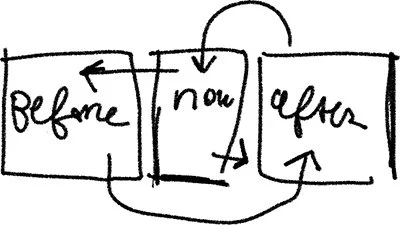
Human beings arguably think and act narratively. Following this narrativist premise, “we” register lived experiences as stories and/or (re)construct them as such, - reading, writing and speaking them as novels, jokes or epic sagas. Improvised biographies stitch genres and aesthetics together, as they frame and re-frame personal recollections with ambient tropes ranging from drama to romcom, thriller, slapstick or porn. Lived experience can be, in this perspective, regarded as a story-in-the-telling process framing and reframing life with or without conscious intent. Staged audiovisually, these stories organise the chaos of experience as an apparently structured continuum. How do they operate?
Resembling subjective experiences, audiovisuals involve viewers and listeners in screen-based immersive experiences. Working against the apparent comforts of passive spectatorship, we seek to challenge them to overcome their “spell”, give us a chance to analyse how they operate, envisage alternatives and invest our insights in our creative practices. This is the critical creativity we suggest to practice through narrative prototyping projects.
Exploring themes together, we’re looking at moviemaking as an opportunity to question this immersion first-hand as creative spectators and critical makers. Who are we talking to, with and for? What kind of scripts are we consciously following, appropriating or reproducing? Where and when is the action taking place, for whom and with whom, what does context, temporal arrangement and spatial settings imply? Whose perspective are we taking, preferring or ignoring when we frame or edit? What kind of discursive agency are we granting ourselves (and potentially striping others from) when we ´re telling someone else´ s story?
What can we notice when we attempt to think and feel through the eyes and ears of another, - a friend or neighbour, a particular target audience or imaginary demographic? What is being constructed, why and how? Shifting between sets, p.o.vs, frames, temporal arrangements and sequential constructs , we learn to navigate between roles and situations, switching between first degree experiences and “bird´s views”, approaching places, people and things as discursive agents and organising meaning making experiences for others to make.

In the past three decades, the so-called “digital convergence” radically transformed pre-existing understanding of broadcast media, unsettling formerly established business models, circulatory dynamics and access modalities to deploy new forms of engagements, reception and creative practices.
Social media platforms streamlined these new models at scale, democratising media participation while generating filter bubbles running on attention moneytizing and micro-targeting schemes. They also normalised surveillance, hate speech and outrage culture as engagement strategy - a notoriously toxic mixture complicating the moderation of public debates essential to democratic life.
Meanwhile, an ongoing technological transformation keeps disrupting media markets and cultures, reformulating what established professions, digital creators and audiences expect or need from each other. Along with the post-truth diagnosis and the normalization of fake news, the rise of artificial intelligence represents the latest of such ongoing disruption, bringing about unseen threats and opportunities.
“Zeitbildung” attempts to reflect these changes in academic and other-than-academic spaces, while developing creative methods exploring the mediasphere from within with a specific form of “critical immersion”.